How to Manage Vinyl Siding Warping: The Professional’s Pillar Guide
The structural integrity of a residential building envelope is often judged by its ability to remain inert under environmental stress. For vinyl siding, a material celebrated for its low maintenance and versatility, the phenomenon of warping—frequently referred to as “oil canning” or buckling—represents a significant breach of that inert ideal. This is not merely an aesthetic grievance; it is a physical manifestation of kinetic energy restricted. How to Manage Vinyl Siding Warping When polyvinyl chloride (PVC) panels are denied the space to expand and contract, the resulting distortion serves as a diagnostic signal for systemic installation or environmental failures.
Managing this distortion requires a departure from the “patch-and-repair” mindset that dominates DIY discourse. To truly address the root causes, one must analyze the building as a thermodynamic system. Vinyl has a high coefficient of linear thermal expansion. A twelve-foot panel can shift in length by as much as five-eighths of an inch between seasonal temperature extremes. If the fastening system—the nails, the clips, and the starter strips—acts as a rigid anchor rather than a floating guide, the material has no choice but to bow outward or inward, creating the characteristic waves that plague poorly executed exteriors.
The complexity of the issue is compounded by modern architectural trends, such as the proximity of neighboring high-efficiency windows, which can create concentrated “solar hotspots” that exceed the material’s heat deflection temperature. This article serves as a definitive exploration of the mechanics, economics, and long-term governance required to stabilize a compromised exterior. By shifting focus from the symptom (the wave) to the system (the thermal assembly), property owners and professionals can implement strategies that ensure the longevity of the facade.
Understanding “how to manage vinyl siding warping”
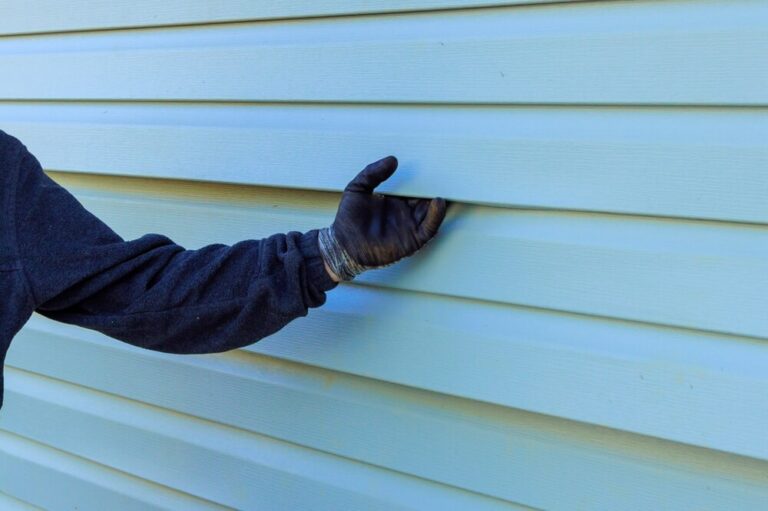
To effectively address the issue, one must recognize that “warping” is an umbrella term for several distinct physical reactions. At its core, the challenge of how to manage vinyl siding warping is a challenge of friction management. If the siding is “pinned”—nailed too tightly to the sheathing—it loses the ability to slide. When the sun heats the panel, the molecules expand, but because the ends are fixed, the center must displace.
A common misunderstanding is that warping is an inherent flaw in the vinyl itself. While lower-grade thin-gauge products are certainly more susceptible to heat distortion, even the most expensive premium siding will buckle if the installation ignores the “floating” principle. Therefore, management starts not with the material, but with the mechanics of the fastener. A nail should never be driven home; it must leave a gap approximately the thickness of a dime between the nail head and the siding hem.
Oversimplification in this field often leads to the belief that simply replacing the warped panels will solve the problem. However, if the underlying cause—such as a lack of clearance at the J-channel or an improperly installed starter strip—remains unaddressed, the new panels will succumb to the same fate within a single solar cycle. Management, therefore, requires a forensic approach: identifying whether the distortion is caused by mechanical restriction, thermal saturation from external reflections, or structural movement of the house itself.
The Evolution of Polymer Stability and Thermal Stress
Vinyl siding has undergone significant chemical evolution since its introduction in the late 1950s. Early iterations were notorious for “rattling” and severe distortion because manufacturers had not yet perfected the blend of impact modifiers and UV stabilizers. Today’s PVC compounds are far more sophisticated, utilizing acrylic-based capstocks that reflect infrared light.
Despite these advancements, the systemic environment has become more hostile. The rise of Low-E (low-emissivity) windows in modern construction has introduced a new variable. These windows are designed to reflect heat away from the glass. If a neighbor’s window is slightly concave due to barometric pressure changes, it can act as a magnifying glass, focusing a beam of intense thermal energy onto the siding of the adjacent house. This “concentrated solar radiation” can reach temperatures exceeding 200°F, far beyond the 160°F to 165°F heat distortion point of standard vinyl. Managing warping in the 21st century now requires looking beyond the house in question to the reflective properties of the surrounding neighborhood.
Conceptual Frameworks: The Physics of Expansion
To visualize the forces at play, we can utilize three primary mental models that dictate the behavior of the building envelope.
1. The Floating Membrane Model
Think of the siding not as a “skin” but as a “curtain.” It hangs from the fasteners. Any point of rigidity—a shutter screw driven through the siding, a light fixture mounted too tightly, or a nail driven into the center of the hem—destroys the membrane’s ability to shift. Management involves restoring the “float” across the entire elevation.
2. The Thermal Bridge and Deflection Point
Every material has a temperature at which it loses its structural memory. For PVC, this is the Heat Deflection Temperature (HDT).
-
The Framework: If the ambient temperature plus solar gain plus reflected energy exceeds the HDT, the material undergoes a phase change.
-
The Limit: No amount of proper nailing can save siding that has reached its HDT; at that point, the polymer chain softens, and the “warp” becomes permanent.
3. The Gap-to-Length Ratio
The amount of space left in the J-channels and utility trims must be proportional to the length of the panel and the temperature during installation.
-
The Framework: Siding installed in 40°F weather needs significantly more room to grow than siding installed in 90°F weather.
-
The Limit: Excessive gaps can lead to panels disengaging from their tracks during high winds, creating a trade-off between thermal safety and wind resistance.
Categorizing Warping: Mechanisms and Trade-offs
Identifying the specific “flavor” of warping is the first step in remediation. Not all ripples are created equal.
Real-World Scenarios and Failure Modes How to Manage Vinyl Siding Warping
Scenario 1: The Winter Installation Error
A crew installs siding in January at 25°F. To ensure a “tight” look, they butt the panels flush against the corner posts.
-
The Failure: By July, the temperature of the vinyl reaches 110°F. The panels expand by nearly half an inch. With nowhere to go, they buckle.
-
Management Logic: The intervention requires removing the corner posts and trimming the ends of every course of siding—a massive labor undertaking that could have been avoided with a 3/8-inch gap.
Scenario 2: The Second-Order Shutter Effect
A homeowner installs decorative shutters, driving long screws directly through the new vinyl siding and into the wood sheathing.
-
The Failure: The shutters act as “pins.” The siding is now locked at two or four points. As the wall heats up, the area between the shutter screws ripples like an accordion.
-
Decision Point: One must remove the shutters and re-drill “oversized” holes through the vinyl so the siding can move behind the shutter hardware.
Planning, Cost, and Resource Dynamics
The economics of managing warped siding are heavily weighted toward labor rather than material. Once a panel is thermally deformed (melted), it must be replaced. If it is merely buckled due to pressure, it can often be “reset.”
Tools, Strategies, and Support Systems
To professionally manage and prevent these issues, specific tools are non-negotiable:
-
The Zip Tool: A small, hooked tool used to unlock the “butt-lock” of vinyl panels to inspect the nailing hem without destroying the panel.
-
Infrared Thermometer: Used to identify “hotspots” on the wall to determine if the warping is caused by reflected sunlight.
-
Slot-Punch Tool: If a panel must be cut to fit, this tool creates a new nail slot that allows for movement, rather than just poking a hole.
-
Heat-Reflective Coatings: Specialized paints (vinyl-safe) for areas already prone to high heat.
-
Oversized Trim: Using 3.5-inch casing instead of 1-inch J-channel to hide larger expansion gaps.
-
Full-Back Thermal Insulation: Contoured foam inserts that provide a “flat” surface, reducing the visual impact of minor oil-canning.
Risk Landscape and Failure Modes
The “Risk Taxonomy” of vinyl management involves recognizing how small errors compound.
-
Compounding Risk: An “over-nailed” panel on a south-facing wall under a Low-E window. This is a “triple threat” where the mechanical restriction meets maximum solar gain and concentrated reflection. The failure is almost guaranteed to be terminal (permanent deformation) within 12 months.
-
Moisture Risk: When siding warps, the “locks” between panels can disengage. This allows bulk water (rain) to get behind the siding. If the house wrap (WRB) is not perfectly integrated, warping leads directly to rot in the OSB sheathing.
Governance, Maintenance, and Long-Term Adaptation
Effective management is an ongoing cycle of monitoring and adjustment. It is not a “set and forget” system.
-
Bi-Annual Movement Test: Every spring and fall, grab a panel and try to slide it horizontally. It should move at least 1/2 inch with moderate hand pressure. If it’s stuck, it’s a “ticking time bomb” for warping.
-
Review Cycles: Inspect the siding after any major home modification (new windows, new deck, or a neighbor’s new construction).
-
Adjustment Triggers: If you see “shadow lines” appearing at the ends of panels, it indicates the siding is moving out of its tracks, suggesting it was cut too short.
Measurement, Tracking, and Evaluation
-
Leading Indicators: Resistance to sliding during the “pull test”; surface temperatures exceeding 150°F on sunny days.
-
Lagging Indicators: Visual ripples; disengaged locks; “claps” or “pops” heard during the heat of the day (the sound of vinyl rubbing against tight nails).
-
Documentation: Keep a “Siding Log” including the installation temperature, the gap width used at corners, and the specific brand/color code for future matching.
Common Misconceptions and Oversimplifications
-
Myth: “Thicker vinyl won’t warp.”
-
Correction: Thicker vinyl (.046″ vs .040″) is stiffer and resists minor ripples better, but it still follows the laws of thermal expansion. It will still buckle if pinned.
-
-
Myth: “Caulking the ends of the siding will keep water out.”
-
Correction: This is a critical error. Caulking the ends of siding in a J-channel locks the panel in place, ensuring it will warp when the sun hits it.
-
-
Myth: “Dark colors are the only ones that warp.”
-
Correction: While dark colors absorb more heat, white siding will warp just as severely if it is nailed tight.
-
-
Myth: “The siding is defective if it rattles in the wind.”
-
Correction: A slight “rattle” often means the siding is properly hung. A dead-silent wall is often over-tightened.
-
Synthesis and Final Judgment
The mastery of how to manage vinyl siding warping is found in the respect for the material’s volatility. Vinyl is a high-performance polymer that demands a specific mechanical environment to succeed. It is an “active” siding—constantly growing and shrinking in a rhythmic response to the sun. To manage it is to become a steward of that movement.
When remediation is necessary, the focus must be on restoring the system’s equilibrium. Whether that means trimming panels that have run out of room, backing out nails that were driven with too much enthusiasm, or mitigating the “death rays” from a neighbor’s window, the goal remains the same: ensuring the facade can breathe. A warped panel is not a sign of a bad product, but a sign of a stifled one. With the right forensic approach and a commitment to “floating” installation principles, the building envelope can remain both beautiful and structurally sound for decades.