How to Manage Vinyl Siding Moisture Issues: A Building Science Guide
The pervasive use of Polyvinyl Chloride (PVC) as a residential cladding material is driven largely by its perceived imperviousness to water. Unlike wood, vinyl does not rot; unlike fiber cement, it does not absorb moisture. However, this inherent material durability creates a paradox in building science: because the panels themselves are waterproof, they often mask systemic moisture failures occurring within the wall assembly. How to Manage Vinyl Siding Moisture Issues. Managing the interface between a non-absorbent exterior and a vulnerable interior structure requires a sophisticated understanding of thermodynamics and fluid dynamics.
Moisture entry behind vinyl siding is an inevitability, not a failure. The material is designed as a “screen,” not a “seal.” The interlocks between panels and the gaps at J-channels are specifically engineered to allow for thermal expansion, but these same gaps serve as pathways for wind-driven rain and capillary action. The challenge for the modern building manager or homeowner is not to create a waterproof box, but to manage the drying potential of the wall once water has inevitably bypassed the primary barrier.
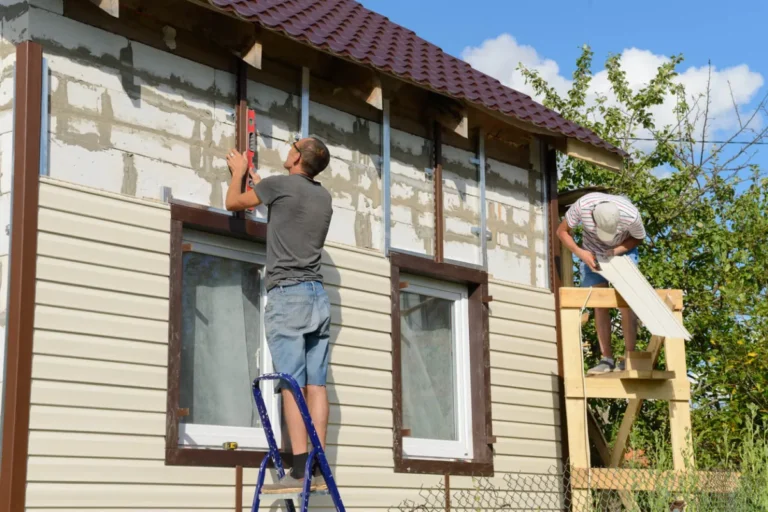
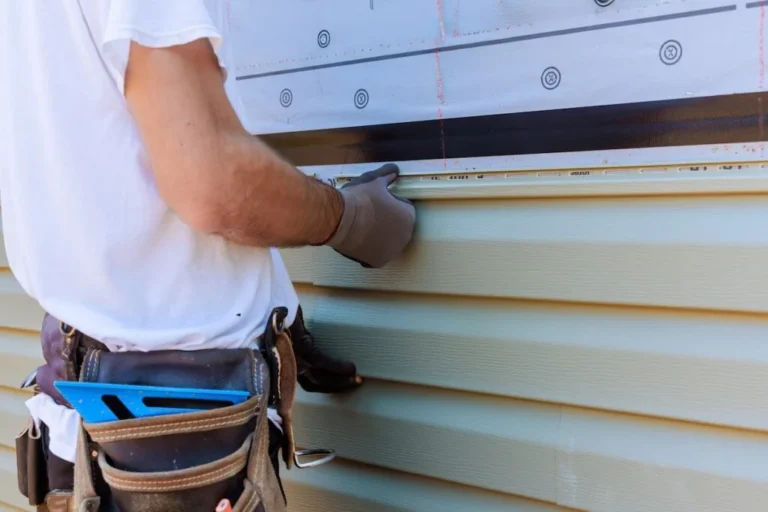
Effective mitigation involves a multi-layered defense strategy. It begins with the sub-structural preparation—the weather-resistant barrier (WRB) and flashing—and extends to the physical maintenance of weep holes and drainage planes. Failure to respect these hidden components often results in “blind rot,” where structural sheathing degrades in an anaerobic environment, hidden from view until the damage requires significant capital expenditure to remediate.
Understanding “how to manage vinyl siding moisture issues”
To effectively address how to manage vinyl siding moisture issues, one must first reject the notion that “leaks” are the only source of trouble. Moisture issues in siding systems typically arise from three distinct vectors: bulk water (rain), vapor drive (humidity), and capillary action (wicking). A common misunderstanding is that caulking every visible gap will solve the problem. In reality, over-caulking often traps water inside the wall, accelerating decay by preventing the “weeping” mechanism designed into the siding profile.
Oversimplification in this domain is dangerous. It is not enough to simply have a house wrap; the wrap must be integrated with the flashings in a shingle-lap fashion. If the house wrap is tucked behind a window flange rather than over it, gravity will direct water behind the barrier. Managing these issues requires a systems-thinking approach where the siding is viewed as the “aesthetic sacrificial layer” and the WRB is viewed as the “functional drainage plane.”
Furthermore, managing moisture is a localized endeavor. A strategy that works for a house in the arid high desert, where evaporation is rapid, will fail in a coastal rainforest where the “drying pressure” is nearly non-existent. The goal is to maximize the wall’s “drying potential”—the ability of the assembly to shed water faster than it accumulates.
The Contextual Evolution of Moisture Management
In the early decades of vinyl siding adoption, it was often installed directly over old wood siding or raw plywood without a dedicated drainage plane. The industry operated under the assumption that the overlap of the panels provided sufficient protection. This era coincided with a rise in structural failures, as tightly packed wall assemblies trapped condensation generated from the home’s interior.
The 1990s and early 2000s saw the introduction of more sophisticated weather-resistant barriers, shifting the focus from “keeping water out” to “letting water out.” This evolution was accelerated by changes in building codes that mandated “drainable” house wraps—products with built-in spacers that create a micro-gap between the siding and the wrap. This technical shift acknowledged that vinyl siding is a vented system by necessity, moving the industry toward the “Rainscreen” standard currently used in high-performance architecture.
Conceptual Frameworks and Hydrological Mental Models
1. The Hydrostatic Pressure Model
Think of the siding as a dam. If water gets behind the dam and has no way to exit at the bottom, the pressure will eventually force that water through the smallest staple holes in the house wrap. Managing moisture is about relieving this pressure through unobstructed weep holes.
2. The Vapor Drive Paradigm
Moisture doesn’t just move as a liquid; it moves as a gas. In the summer, solar heat hits damp siding, driving water vapor inward toward the cool, air-conditioned interior. If the wall has a “vapor-closed” layer in the wrong place, this moisture condenses on the studs. The mental model here is “The One-Way Valve”—the wall must be able to dry in at least one direction.
3. The Capillary Break Model
Water can “climb” tight spaces. When vinyl siding sits too close to a flat surface (like a window sill), water can be sucked upward into the assembly. Managing moisture requires creating physical gaps—capillary breaks—that are too wide for water to bridge through surface tension.
Categories of Moisture Entry and Systemic Trade-offs
| Entry Vector | Mechanic | Mitigation Strategy | Systemic Trade-off |
| Wind-Driven Rain | Horizontal force | Deep interlocks / Starter strips | Higher material cost |
| Hydrostatic Accumulation | Gravity / Pooling | Drainable WRB / Weep holes | Requires precise leveling |
| Vapor Diffusion | Pressure differential | High-perm house wrap | Lower R-value in some cases |
| Capillary Action | Surface tension | 1/4″ gaps at terminations | Aesthetic “open” seams |
| Thermal Bridging | Condensation | Continuous exterior insulation | Increased wall thickness |
Decision Logic for Management
The decision on which mitigation tier to employ depends on the “exposure rating” of the wall. A wall protected by a deep roof overhang requires less intensive drainage than a three-story gable end facing the prevailing wind.
Detailed Real-World Scenarios How to Manage Vinyl Siding Moisture Issues
Scenario A: The Multi-Story Gable End
A tall wall with no overhangs is subjected to massive amounts of vertical water runoff.
-
Problem: Water cascades over the siding joints, eventually finding a path behind the J-channel at the roofline.
-
Management: Implementation of “kick-out” flashing where the roof meets the wall to divert water into the gutter and away from the siding interface.
-
Secondary Effect: Without this, the corner post becomes a vertical “aqueduct” for bulk water.
Scenario B: The Solar-Driven Condensation
A dark-colored vinyl siding on a south-facing wall in a humid climate.
-
Problem: Morning dew is trapped behind the siding; the afternoon sun “bakes” this moisture, driving it through the OSB sheathing.
-
Management: Installation of a textured, “crinkled” house wrap to provide a 1mm drainage gap.
-
Failure Mode: Using a flat, perforated wrap that allows solar-driven vapor to pass through easily.
Planning, Cost, and Resource Dynamics
The cost of managing moisture is an insurance policy against structural failure. Remediation of rotted sheathing and mold can cost 5-10 times more than the initial cost of a high-performance drainage system.
Direct vs. Indirect Costs
-
Direct: $100–$200 per “square” for premium house wraps and tapes.
-
Indirect: Time required for “lapping” flashings correctly. It is a slow, meticulous process that doesn’t show in the final aesthetic but is critical for performance.
-
Opportunity Cost: Choosing a cheaper, non-drainable wrap to save $500 on a whole-house project, only to face a $15,000 rot repair in a decade.
Material Cost Variability
| Component | Standard | High-Performance |
| House Wrap | $0.15 / sq ft | $0.45 / sq ft |
| Flashing Tape | $15 / roll | $45 / roll |
| Sealants | $4 / tube | $12 / tube |
Strategies, Tools, and Support Systems
-
Drainable WRB: Features spacers to ensure a dedicated path for water to reach the bottom of the wall.
-
Intumescent Weep Vents: Used in specific fire-rated assemblies to allow drainage while blocking flame.
-
Kick-out Flashing: A specialized metal diverter at roof-to-wall intersections.
-
Butyl-Based Tapes: Unlike rubber-asphalt tapes, butyl remains flexible and sticky in extreme cold and heat.
-
Moisture Meters: Essential for auditors to check sheathing health without removing panels.
-
End-Dams: Small folds at the end of window sills to prevent water from running off the side of the flashing.
Risk Landscape and Failure Modes
The “Taxonomy of Rot” usually follows a predictable path of compounding failures.
-
The “Tuck” Error: The most common failure mode occurs when a contractor “tucks” the house wrap behind a piece of flashing instead of “lapping” it over the top.
-
The “Caulk Trap”: Homeowners often see a gap at the bottom of a window and caulk it shut. This prevents the window’s internal drainage system from “weeping,” forcing water into the wall.
-
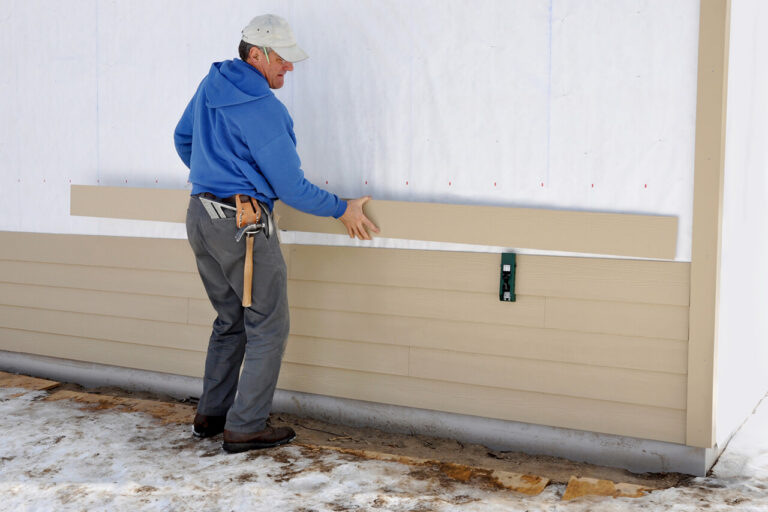
The “Bottom Course Blockage”: If the siding is installed too close to the ground or mulch, the weep holes become clogged with dirt, turning the bottom panel into a water trough.
Governance, Maintenance, and Long-Term Adaptation
A moisture management plan must be revisited annually.
-
Check the “Clearance”: Ensure that mulch or soil has not been built up against the bottom of the siding. There should be a 6-inch gap to the soil.
-
Inspect the Weeps: Use a small brush or compressed air to ensure the weep holes in the bottom edge of the vinyl panels are clear of insects or debris.
-
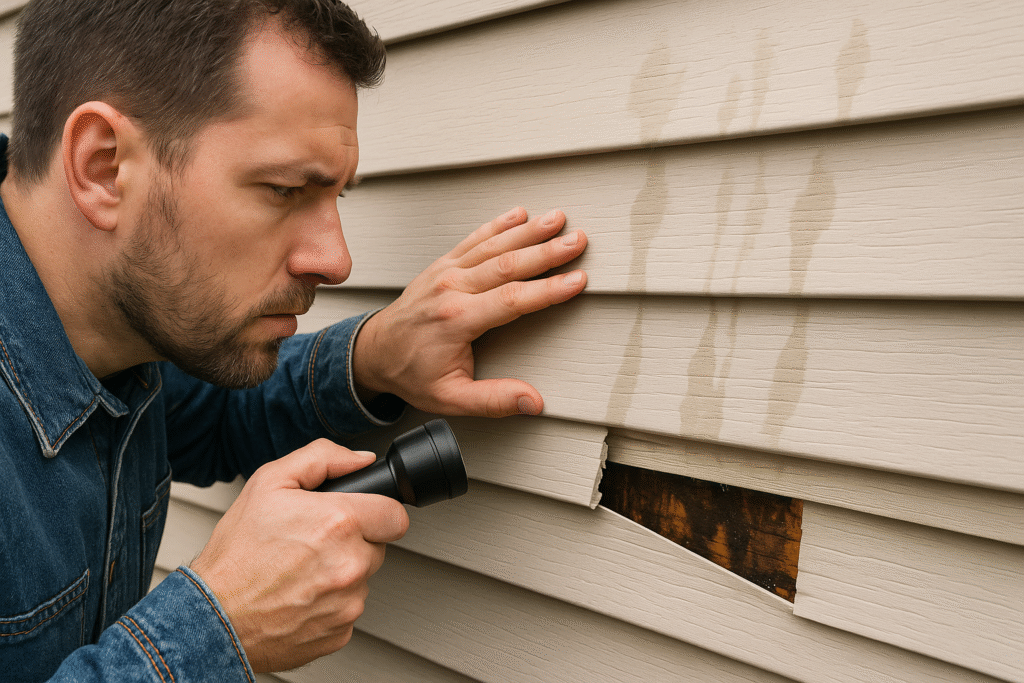
Monitor the Interior: Check the drywall under windows for “ghosting” or soft spots, which are leading indicators of a slow exterior leak.
Measurement, Tracking, and Evaluation
-
Qualitative Signal: Absence of “musty” smells in the attic or crawlspace near exterior walls.
-
Quantitative Signal: Using a pinless moisture meter to track the % moisture content (MC) of the sheathing; anything over 19% MC is a trigger for immediate investigation.
-
Documentation: Keep a “Flashing Log” with photos of the window and door wraps before the siding was installed. This is invaluable for future structural assessments.
Common Misconceptions and Industry Myths
-
Myth: “Vinyl siding is waterproof.”
-
Correction: The panels are, but the system is a sieve by design.
-
-
Myth: “Tight siding is better.”
-
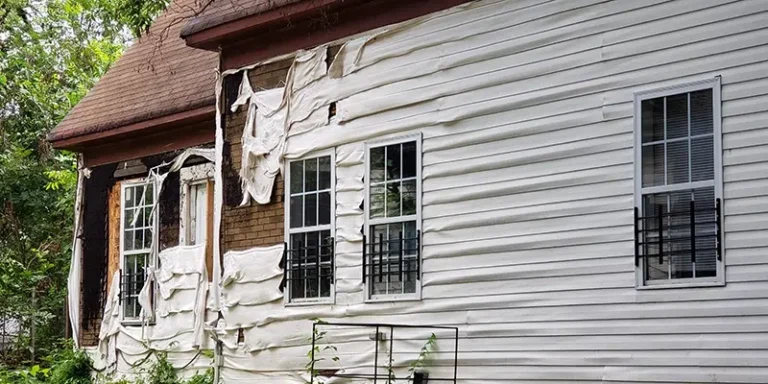
Correction: Siding that is nailed too tight buckles, creating “fishmouth” openings that let in more water.
-
-
Myth: “House wrap is a vapor barrier.”
-
Correction: Most wraps are vapor-permeable; they block liquid water but let vapor through to avoid trapping condensation.
-
-
Myth: “Caulk is a permanent fix.”
-
Correction: Caulk is a maintenance item with a 3–7 year lifespan in exposed areas.
-
Synthesis and Final Editorial Judgment
Managing moisture in a vinyl-clad structure is an exercise in humility. One must accept that water is a persistent force that will find the path of least resistance. Therefore, the best horizontal siding options are those that are integrated into a redundant drainage system.
The editorial conclusion is clear: the longevity of a home has less to do with the “plastic” on the outside and everything to do with the “pathway” behind it. Success is measured not by the absence of water, but by the efficiency with which that water is returned to the environment. Any strategy that fails to account for the “drying potential” of the wall is not a management plan, but a countdown to structural failure. Intellectual honesty requires prioritizing these invisible systems over the visible finish.